
01
Home
02
Services
03
Cases

04
About Us

05
Careers

06
Blog

07
Contact Us
01
Home
02
Services
03
Cases
04
About Us
05
Careers
06
Blog
07
Contact Us
Ask for a free consultation now
The official launch of a global outdoor brand, with 1,519 SKUs running on Shopify from day one.
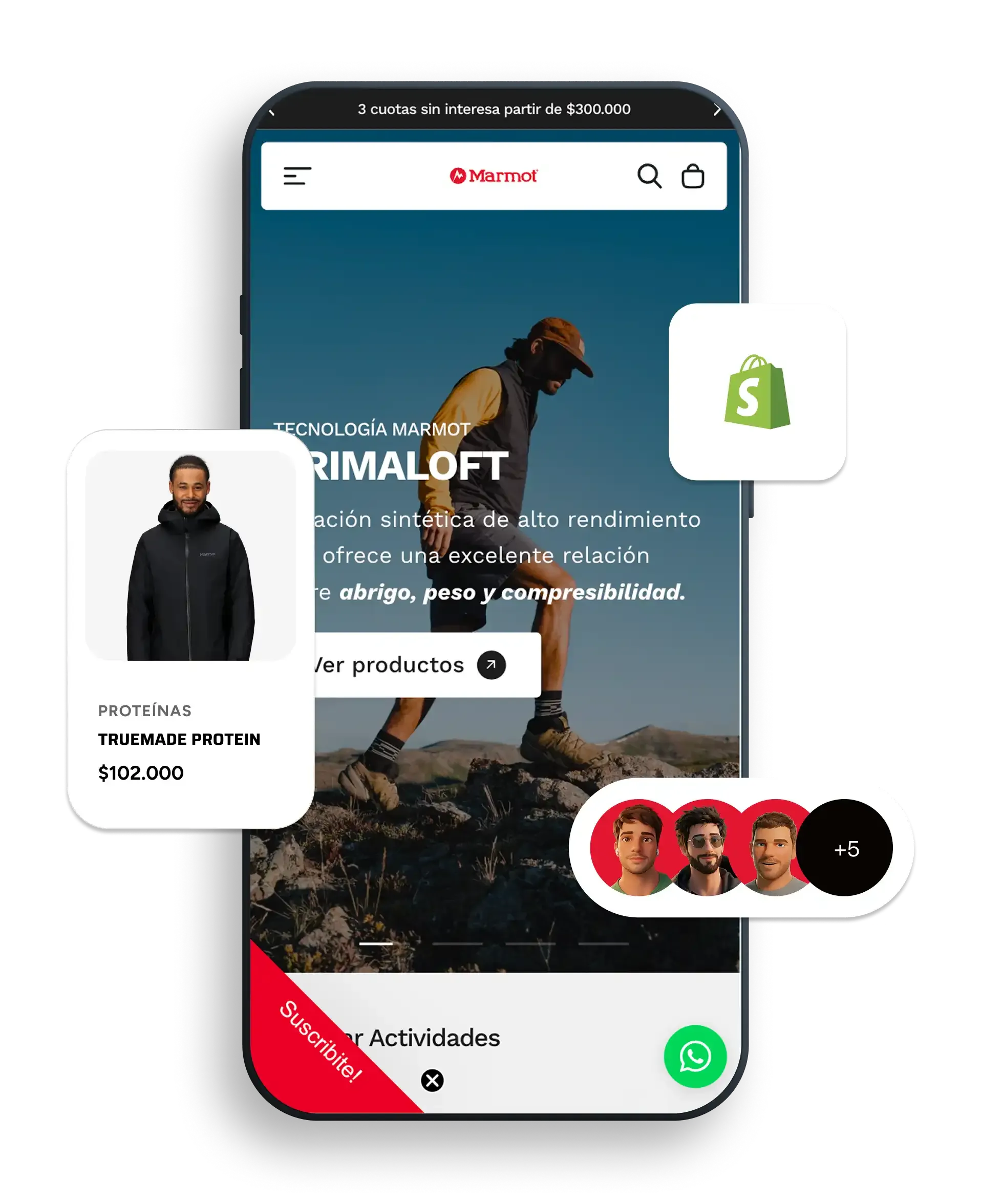
A direct-to-consumer channel with the full Argentine stack live at launch, built to capture the competitive window.
Marmot, one of the world's most respected American brands in technical mountain apparel and gear, had no official digital channel in Argentina. The project meant landing the brand locally through a D2C channel built from scratch.
Build from scratch the official D2C channel of a global brand, with an extensive technical catalog and under Argentina's e-commerce rules (installments, anti-fraud, nationwide fulfillment), on an aggressive timeline to beat competitors to the window.
A 100% native architecture on Shopify as the centralized core for catalog, stock and orders, powered by a stack of 14 specialized apps that cover payments, logistics, retention and analytics from day one.
Marmot carries weight in the outdoor world. Founded in the United States, with decades of technical mountain gear and a steady global digital presence, the brand reached Argentine shoppers through resale, trips abroad or customs. What did not exist was an official channel, backed by serious importing logistics and the kind of shopping experience an outdoor consumer expects from the brand.
That window was open and capturable. The challenge was not selling technical apparel: it was building, at the same time, the e-commerce launch and the brand's official positioning in the local digital channel. And it had to happen fast, before the competitive window closed.
The catalog was not simple. Marmot brings more than 190 parent products with complex combinations of size, color and technical specification: in total, 1,519 SKUs that had to be loaded, structured, filtered and maintained without the shopper getting lost along the way. Buying a waterproof jacket is not picking a color: it is cross-referencing thermal rating, discipline, waterproofing and size, all in seconds.
On top of that catalog complexity sat the Argentine ecosystem with its own rules: installments without credit cards, strict anti-fraud, nationwide automated logistics. Everything had to be ready on launch day, not in a second phase. And it had to happen fast, before any local competitor stepped into the space Marmot still had open.
The architecture was built on Shopify as a centralized core for catalog, stock, orders and operations. Around the core, a stack of 14 specialized apps covering every layer of the business without adding friction to the team running day-to-day operations.
For the catalog, Bulkflow handled the bulk upload and efficient management of 1,519 SKUs, and Search & Discovery enabled the technical filters an outdoor shopper needs: waterproofing, thermal rating, discipline, size. For local payments, Mercado Pago integrated with AR credit cards and installments without credit cards, plus Mercado Pago Antifraud Plus to maximize payment approval rates and shield the operation against chargebacks. For logistics, ShipNow natively synced with Shopify for automated fulfillment and real-time tracking across the country. The Argentine ecosystem, closed from day one.
The D2C stack rounded out with Klaviyo running automated flows for welcome, cart abandonment and technical apparel education, STOQ capturing unmet demand through back-in-stock alerts, Judge.me and Stockist delivering social proof and physical store geolocation, and Microsoft Clarity measuring behavior from minute zero to let the team optimize on real data instead of assumptions.
The outcome of the project is an operation that runs end-to-end from its first day live. 192 parent products, 1,519 active SKUs, 14 integrated and synchronized apps, local payments operating with installments and anti-fraud, nationwide automated fulfillment, and a measurement baseline installed to iterate on real user behavior.
The outcome that mattered to the business, though, sat elsewhere: Marmot officially reached the Argentine market before a competitor could occupy that space, and did it on an architecture built to grow without being rewritten. Shopify sustains the full operation of a complex technical catalog today, and the same stack that powered the launch supports the next phase: more lines, more seasons, more apps if needed, without touching the foundation.

